Bright SpotThe Three-Year Bachelor’s Degree Goes From Zero Programs to About a Hundred
An Alabama state senator is drafting a bill to let public universities and community colleges award bachelor’s degrees in high-demand fields such as nursing and teaching at 90 to 100 credits rather than the usual 120. Alabama’s accreditor approved a formal pathway for reduced-hour degrees in March. Iowa directed its three public universities to build three-year degrees under a 2025 law and its regents have approved the first two, Oklahoma cleared four accelerated programs in September, and Virginia and Ohio are drafting blueprints. In early 2023 no US college offered a three-year reduced-credit bachelor’s degree. About 100 have been announced or launched since, according to Jobs for the Future.
Read the full story → Higher Ed DiveWhy it matters: A quarter fewer credits is a quarter less tuition and a year earlier into a paycheck. After two decades of arguing about college cost, this is one of the few ideas that lowers the price by changing the product rather than the subsidy.
The Supreme Court Hears on Monday Whether School Employees Can Sue Under Title IX
Oral argument in Thomas Crowther v. Board of Regents of the University System of Georgia is set for November 30. The question is whether employees of schools and colleges may bring their own Title IX suits for sex discrimination, or whether they are confined to Title VII, which carries filing deadlines, exhaustion requirements and damage caps. The Eleventh Circuit ruled in 2024 that Title IX’s private right of action does not extend to employees, putting it at odds with at least eight other circuits. The case joins a claim from a male professor with one from MaChelle Joseph, a former Georgia Tech women’s basketball coach who says she was fired after complaining about unequal resources for her program.
Read the full story → K-12 DiveWhy it matters: The National Education Association argues the answer bears on recruitment and retention while schools are still short of teachers. The ruling decides which door an employee walks through, and how long they have to walk through it.
Washington Moves Against Virginia After a District Closed Over Background Checks
The Education Department said it will press Virginia to withhold federal funding from Albemarle County Public Schools and will seek to place the Virginia Department of Education on high-risk status until districts statewide comply with student safety requirements. The Charlottesville-area district, about 14,000 students across 29 campuses, closed every school after disclosing that more than 500 hires over three years had cleared criminal background checks but were never submitted for the child protective services registry review. The district said on November 22 that all 512 applications had since been cleared. The state has 30 days to file a corrective action plan.
Read the full story → Education WeekWhy it matters: Two separate checks exist because they catch different things, and a district can pass one while quietly skipping the other for three years. Every district in the country runs the same two-part process, which makes this a filing-system problem before it is a Virginia problem.
Preschool Suspensions Rose 67 Percent While Preschool Enrollment Grew 12 Percent
An analysis by EdTrust and AdvancED Equity of federal Civil Rights Data Collection figures found that out-of-school suspensions of preschoolers rose 67 percent between 2021-22 and 2023-24, while the expulsion rate nearly doubled. Expulsions are up 173 percent since 2020-21. District-run preschool enrollment grew from 1.4 million to 1.5 million over the same period. Black preschoolers were 18 percent of enrollment and 37 percent of those suspended. Boys were 54 percent of enrollment and 81 percent of those suspended. Because the federal collection counts only formal actions, informal removals are almost certainly undercounted.
Read the full story → K-12 DiveWhy it matters: A four-year-old sent home is a parent who misses a shift. The report’s co-author put the choice plainly: suspend small children, or fund the teacher training and classroom support that keep them in the room.
More Than Half of District Leaders Expect to Keep Losing Students
An EdWeek Research Center survey of 163 district leaders and 150 school leaders found that nearly two-thirds had seen enrollment fall over the past five years, and 55 percent expect the decline to continue for five more. About three in four pointed to demographic change such as falling birth rates, while 37 percent named charter schools, 36 percent homeschooling and 30 percent private schools. Half of rural and small-town leaders named homeschooling, against 24 percent of urban leaders. Public schools have lost roughly 1.4 million students since before the pandemic, yet the number of schools has barely changed and the teaching force has grown.
Read the full story → Education WeekWhy it matters: Most districts have chosen to stretch a budget built for more children rather than close buildings or cut staff. As Stanford’s Thomas Dee put it, the closures everyone argues about largely have not happened yet.
Syracuse Will Let AI Read Undergraduate Applications First
Syracuse University said it will use generative AI for the first review of undergraduate applications this cycle, converting grades to a uniform scale, gathering high school context and drafting a short summary attached to each file. Admissions readers can also put questions to the system about an applicant’s packet. The university tested the process on past applications with identifying details removed, says applicant data is stored securely and is not used to train models, and insists no decision is automated. Georgia Tech and the University of Pennsylvania use AI for transcript and administrative work. Michigan, Rice and Georgia told a recent conference they do not use it to review applications.
Read the full story → Higher Ed DiveWhy it matters: Students have been told for two years that leaning on AI for an application is cheating. The first read on the other side of the desk is now done by a machine, which turns the honesty rules into a two-way conversation.
Federal Reserve Researchers Call the New Student Loan Caps a Blunt Instrument
A discussion paper from the Federal Reserve Bank of Philadelphia’s Consumer Finance Institute examined the 2025 law that ended Grad PLUS and set lifetime federal borrowing limits of $100,000 for graduate students and $200,000 for professional students. Borrowers above those limits defaulted at 6.5 percent over three years against 3.3 percent for those below, and master’s borrowers above the caps defaulted at 7.2 percent. Credit score predicted default far more sharply, from 12.4 percent in the lowest band to about 0.5 percent in the highest, and borrowers in high-earning programs outperformed stronger-credit borrowers in low-earning ones.
Read the full story → Higher Ed DiveWhy it matters: The caps screen on the size of the loan, which the research found to be the least predictive variable available. The authors warn the design could push students who would have repaid toward private lenders instead.
UK Study Visa Refusals Hit Their Highest Rate in More Than a Decade
Home Office figures analysed with Higher Insights and The Admit put the rolling refusal rate for sponsored UK study visas at 6.4 percent in the year to September 2026, the highest since 2015 and more than double the 3.1 percent recorded a year earlier. Excluding China the rate is 8.2 percent. Withdrawals before a decision jumped from 779 to 3,682 in the July to September quarter, a rise of more than 370 percent, while applications fell 16 percent and visas issued fell 17 percent. The Russell Group said it is watching the rise closely and urged that decisions stay fair and transparent.
Read the full story → The PIE NewsWhy it matters: The third quarter is when the UK issues the visas for its autumn intake, so this is the window that sets a whole year of enrolment. Students comparing destinations now have to price in the odds of refusal, not just the cost of tuition.
The UN General Assembly Puts Literacy Back at the Centre of the Agenda
UNESCO reported that the General Assembly adopted a resolution titled Literacy for Life: Shaping Future Agendas, reaffirming literacy as a fundamental right and as the foundation for digital skills, AI literacy and media literacy. It asks UNESCO to coordinate its Youth and Adult Literacy Strategy for 2026 to 2029 and the Global Alliance for Literacy action plan through 2030, and to keep literacy central to the 2027 Global Education Meeting. Youth literacy rose from 91 to 93 percent between 2015 and 2024 and adult literacy from 86 to 88 percent, yet 739 million adults still lack basic literacy and about 273 million children and young people, one in six, are outside education altogether.
Read the full story → UNESCOWhy it matters: The resolution ties reading to AI literacy rather than treating them as two separate projects. A student who cannot work through a paragraph cannot judge what a machine hands them.
On This Week
The Day Every Child Got a Right to the Classroom
November 29, 1975
Fifty-one years ago today President Gerald Ford signed the Education for All Handicapped Children Act, Public Law 94-142. Before it, states could and did turn children away: roughly one million American children with disabilities were excluded from public school altogether, and many more sat in classrooms with no services at all. The law required a public education at no cost, appropriate to each child’s needs, in the least restrictive environment, and invented the document that still governs the work, the individualized education program. Ford signed it with public reservations about whether Washington would ever fund its share, a complaint districts have repeated in every decade since. The act was renamed the Individuals with Disabilities Education Act in 1990 and now covers about 7.5 million students.
Nov 30
Supreme Court argument. The justices hear Crowther v. Board of Regents on whether school and college employees can sue under Title IX or must use Title VII alone.
Dec 8
Two closure decisions. Indianapolis Public Schools votes on shutting six schools, and Commonwealth University’s wind-down plan for the Mansfield campus is due to the chancellor.
Dec 10
SNAP comment deadline. Public comment closes on the USDA rule that would end the automatic no-cost meal certification roughly 1.8 million children rely on.
Dec 11
Federal funding runs out. The continuing resolution expires, forcing Congress to choose between the Senate’s $93.9 billion, the House’s $71 billion, or another stopgap.
Dec 16
Philadelphia school selection closes. Families must apply without knowing whether rescored state test results will arrive in time.
Dec 23
Virginia’s corrective plan is due. The state has 30 days from the Education Department’s notice to file a plan covering background-check compliance in every district.
Jan 1
Two laws take effect. The Education Freedom Tax Credit opens, with states required to notify the IRS by this date, and Colorado’s Proposition 134 begins.
Community News submission
4imprint Named Custom Promotional Products Supplier of the Year 2026
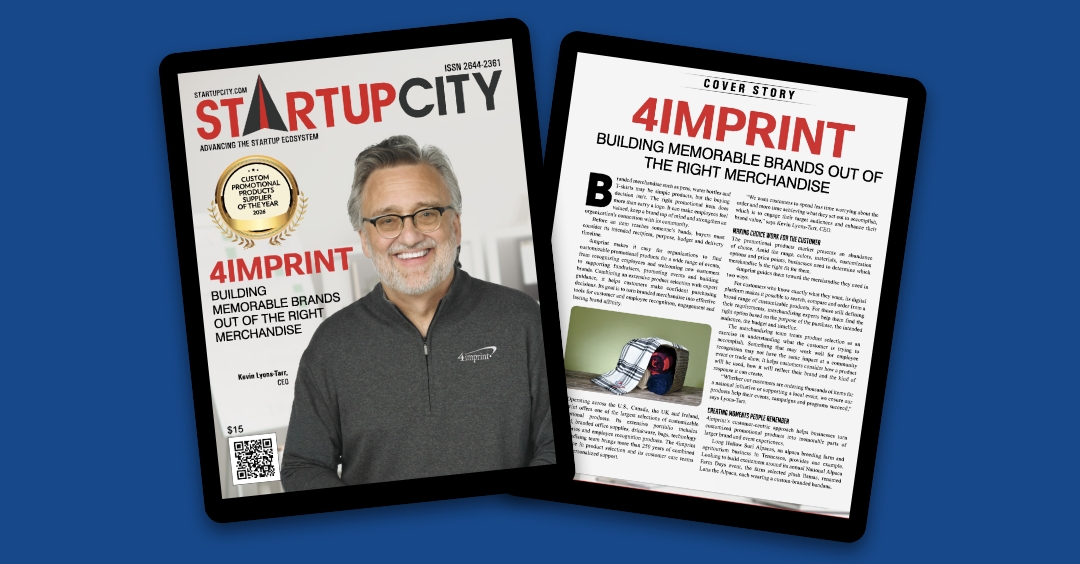
Oshkosh-based promotional products distributor 4imprint Inc. has been selected as the Custom Promotional Products Supplier of the Year 2026 by Startup City. 4imprint is featured on the cover of the October issue of Startup City Magazine, with its full story available online at https://www.startupcity.com/4imprint-2026.
This recognition reflects 4imprint’s focus on making it easy for organizations and businesses to find promotional products to support marketing efforts, recognize employees, connect with customers and more.
Startup City called out the “extensive product selection” and “expert guidance” offered by 4imprint and its team. The story also highlights 4imprint’s 360° Guarantee®, which includes on-time delivery, free samples, complementary artwork assistance and pricing protection.
“Companies will always need ways to recognize people, welcome them, bring them together and make experiences memorable with branded products,” Startup City noted. “4imprint is making that process easier and more certain, from the first product search to the moment the merchandise reaches the recipient’s hands.”
Startup City is a print and digital industry magazine with more than 70,000 subscribers nationwide. It’s designed to help company founders, venture capitalists, investors and business leaders share real-world experiences and strategic lessons directly with peers.
“Startups fuel economic growth and their innovative spirit inspires us all,” said Kevin Lyons-Tarr, CEO of 4imprint. “We’re proud to know our promotional products are being put to work, right alongside the teams driving their business growth.”
4imprint helps businesses, organizations and startups promote their brands through branded merchandise and other custom promotional products. With tens of thousands of individual products, its extensive selection includes personalized apparel, imprinted drinkware, corporate gifts, trade show giveaways and other customized items featuring company logos. Customers can choose from a variety of decoration methods, including embroidery, engraving, screen printing, full-color printing, embossing and debossing, helping to support marketing, advertising and employee engagement efforts.
This recognition follows 4imprint’s inclusion on Forbes® America’s Best Employers list. To learn about other honors earned by the promotional products supplier, visit 4imprint.com/info/bpw.
Free resources tied to this week's stories
Every resource below is tied to one of this week's stories. They are free, and they come from across the K12 Academics network: our tools library (tools.k12academics.com), teacher PD workshops (pd.k12academics.com), lesson plans (lessonplans.k12academics.com), and State of Education research (research.k12academics.com).
Rights When a Family Loses Its HousingFor story 1 on record student homelessness: the federal law that governs enrollment, school stability and transportation, plus the teacher training behind it.
What a Bachelor’s Degree Actually RequiresBehind story 2 on three-year degrees: how credits, degree types and return on investment compare before you commit to four years.
Knowing Your Rights at SchoolFor story 3 on the Title IX case at the Supreme Court: what students, families and staff are entitled to, and where the records sit.
How a State Holds Its Schools AccountableAlongside story 4 on Virginia and the federal high-risk warning: what the state measures, reports and is answerable for.
Discipline in the Earliest GradesWith story 5 on the rise in preschool suspensions: the training that keeps four-year-olds in the classroom instead of sending them home.
When Your District Is ShrinkingFor story 6 on enrollment decline: how to evaluate, enroll in and move between schools when the one you know is changing.
AI on Both Sides of the Admissions DeskBehind story 7 on Syracuse: what AI is doing in admissions, and what counts as honest use of it on an application.
Borrowing Before You SignFor story 8 on the federal loan caps: what federal loans cost, what is safe to borrow, and what repayment actually looks like.
Studying in the United KingdomAlongside story 9 on UK visa refusals: how the system works for international students, and how the wider market is moving.
Reading as the Base LayerFor story 10 on the UN literacy resolution: the evidence on how reading is taught, and classroom material to teach it with.
Have education news to share? Community members can submit it for a future edition by emailing news@k12academics.com.

